A Note from Kate Peterson
Honoring Women’s History Month
In honor of Woman’s History Month, we at FFA-NC were tossing around the idea of focusing on someone who influenced the history of Foster Care. I immediately thought of my friend and colleague, Leslie Kellenberger.
We in child welfare circles talk about “not everyone can foster or adopt, but everyone can do something to help”. Leslie is an incredible example of someone who very quietly has given of her talents to improve the lives of caregivers, resource parents, children, their families and those workers and systems who support them.
I met Leslie when my career was in its toddler stage in 1987. I had just gotten a position at Methodist Home for Children at the ripe old age of 27. It was there I met a woman who was at the reception desk answering the phone part time. She started her position there around the same time as I.
When I asked her recently “What drew you to foster care?”, Leslie quickly replied two things, “I never had children so helping there was something I could do” and “Muh Brown”. Muh lived most of her life at Methodist Home, first as an orphan, and then taking care of children in the orphanage Boys Cottage. Muh was pretty famous in Methodist Home lore. Leslie met Muh when her mother-in-law was in the same rest home. Leslie would visit her mother-in-law and then talk with Muh.
Leslie had worked as a paralegal then in commercial property management for a construction company, but was not happy in that position. She also had no idea what she needed to be doing next. Muh flatly told Leslie that she was miserable and needed to do something she would love. She told her she needed to go work at Methodist Home for Children, that she would like it there. And she did. And we met.
Leslie moved quickly from the front desk to supporting all the group homes administratively. It was while she was in that position I learned just how talented she was. She knew every staff person’s names. She knew every social worker who called. Every DSS director, everyone at Juvenile Justice, Medicaid and DMH, every parent, every foster and adoptive parent. When she asked how they were, they knew she was genuine.
Leslie was genuine because she had an idea from where they were coming. Her only sister is in recovery. In 1975, she met her mother-in-law-to-be who suffered from mental illness and addiction for the first time in a transitional home for women coming out of psychiatric hospital and required involuntary periodic hospital stays until 1996. She has been a caregiver, struggling to support the people she loves when they are struggling the most.
At the same time, I was growing a foster care program. We began having county specific contracts and grew from four homes to over a hundred. I had the ability to hire an administrator and just know it had to be Leslie. She had some talents that I simply didn’t. She could read and interpret Medicaid policy and rules incredibly well. She could help explain it to families and staff in ways they understood. She called up state people and asked very well-informed questions of clarification and tried to explain why a particular rule contradicted another system’s rule. She became a self-taught expert in understanding systems that did not work together very well, and became an outspoken advocate. She interpreted, and I worked to implement and get the families to serve our kids. We worked together a long time like this-we both moved to another agency, me to run the programs and she to run all things to support. We again served hundreds of children and resource families during those years. We parted working directly together, but she continued her advocacy—trying to get the state to write a better therapeutic foster care definition inclusive of work with the family among other things. We must have been on at least three workgroups that rewrote that definition. It never got changed. But, I guarantee our sweet Leslie got state policymakers to better understand our work and the role of caregivers-she would ask the same question until someone finally answered. And in the same breath she’s tell them to have a great day and she was so glad they could be helpful.
In the days before COVID, she carried a basket full of snacks to every meeting she went, offering it up to everyone. She would ask you to be on a workgroup but she really was telling you—no one ever tells her no. That is because she genuinely knew you were the right person. And then she’d very sweetly and doggedly ask over and over again the question everyone is leaving unanswered and for caregivers and staff it causes a world of confusion. Until it gets answered.
For the past 11 years she had facilitated the Therapeutic Foster Care Collaborative for Alliance Health. I worked as a staff there before retiring in 2025. Leslie, in true Leslie style brought together multiple system leaders, asked them questions and welcomed everyone warmly. She routinely had meetings where 70-80 people attended, packed the agenda and off she went to ask those questions. She said she used her relationships, her patience (20 years working on Raise the Age!) and doggedness to get people to the table and share. It was unique and informative and valued all systems sharing. As the Child and Family Specialty Plan rolled out, Alliance has ended the Therapeutic foster Care Collaborative.
Today Leslie spends her “retirement” helping others vote, linking folks across racial lines in Pamlico County and still supporting resource parents, especially grandparents, by challenging those systems that don’t quite work together very well. She holds office with the NC Chapter of the Family Focused Treatment Association (FFTA), serves on the Board of Pamlico Partnership for Children, co-founded the Ol’ Front Porch Music Festival in Oriental, and has a consulting business. In honor of Women’s History Month, we honor the history I have shared with this tiny woman with a big heart and a huge voice.
Kate Peterson
Organizational Strategist
FFA-NC
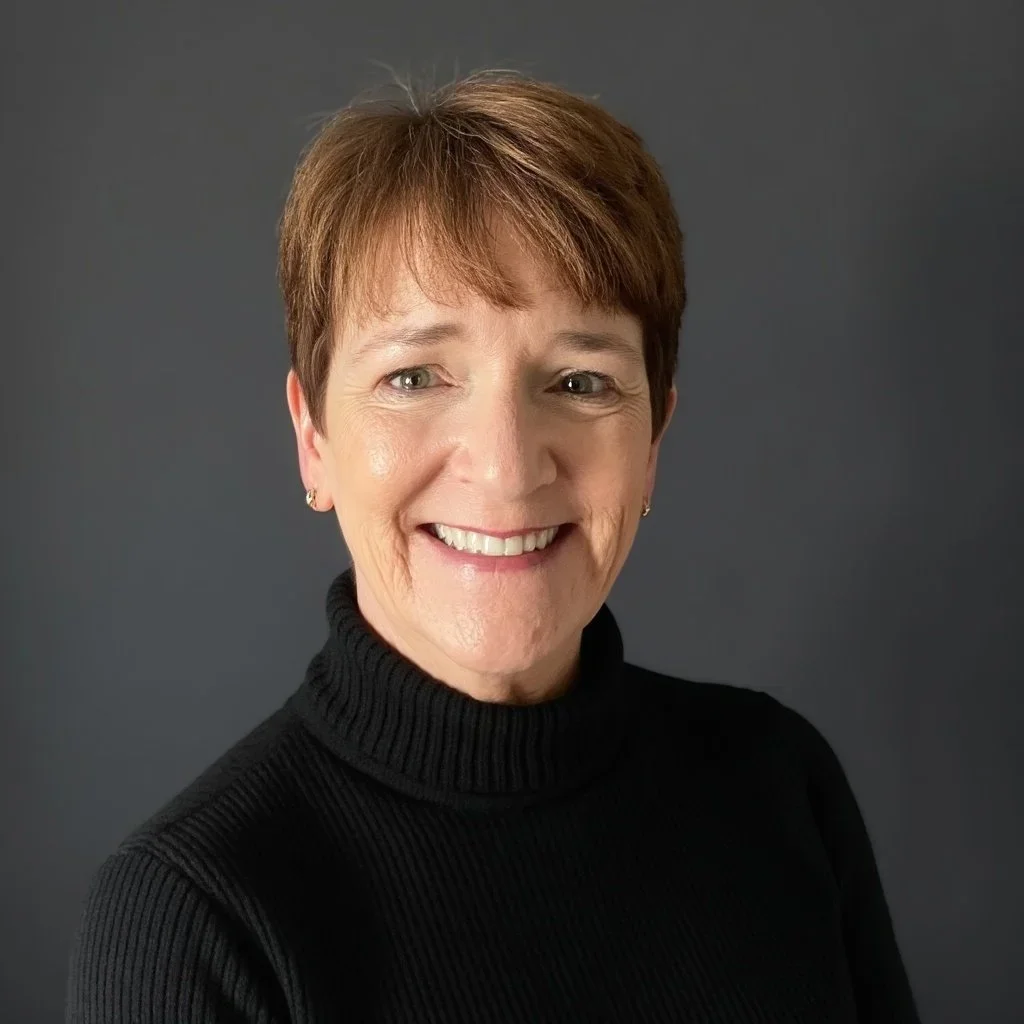
Kate Peterson -Organizational Strategist -FFA-NC